

Participating in any Web3 platform involves real risk. Users may face market volatility, smart-contract or software faults, scams, compromised credentials, irreversible transactions, changing rules, liquidity constraints, and regulatory uncertainty, so participation should be based on informed judgment rather than promises of guaranteed income or safety.
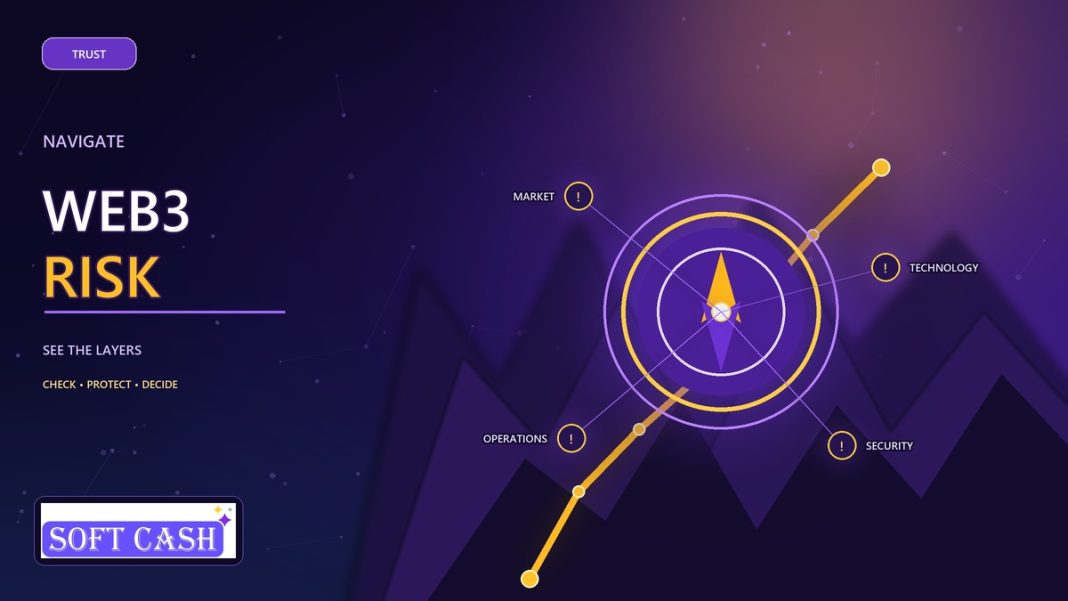
Risk cannot be reduced to one warning or one security feature. It is better understood as a set of connected layers: the asset, the technology, the account, the platform’s operations, and the user’s own decisions.
Start with the asset and market risks
Digital-token values can rise or fall quickly. A token may have limited liquidity, and the price shown in one place may not match what a user can receive after spreads, fees, taxes, slippage, and available market depth are considered. A utility token’s role inside a platform does not guarantee external demand, price appreciation, or an easy exit.
Users should separate a platform’s published reward amount from the real-world value they may eventually realize. Rewards can also depend on eligibility, verification, budget, review, and current configuration. None of those conditions turns a token reward into a fixed financial return.
Technology can fail in several places
Web3 activity depends on more than a visible website or app. Wallet software, smart contracts, blockchains, bridges, APIs, infrastructure providers, and user devices may each introduce risk. Code may contain defects, a network may become congested, a transaction may remain pending, or an external service may become unavailable.
Blockchain confirmations are designed to provide traceable records, but they do not automatically prove that every related off-chain claim is correct. Soft Cash Finance therefore distinguishes the on-chain SOFT Wallet from the off-chain Reward Center. Readers can review how on-chain and off-chain balances are separated.
Users should verify the network, destination, amount, fee, and transaction details before confirming. Blockchain transfers may be irreversible, and sending an asset to the wrong network or address can result in loss.
Account security is a shared responsibility
A platform can apply authentication, verification, session controls, server-side authorization, and fraud review, but a user can still be targeted through phishing, impersonation, malware, SIM-related attacks, weak passwords, or social engineering. No genuine support representative should need a password, PIN, private key, seed phrase, or one-time authentication code.
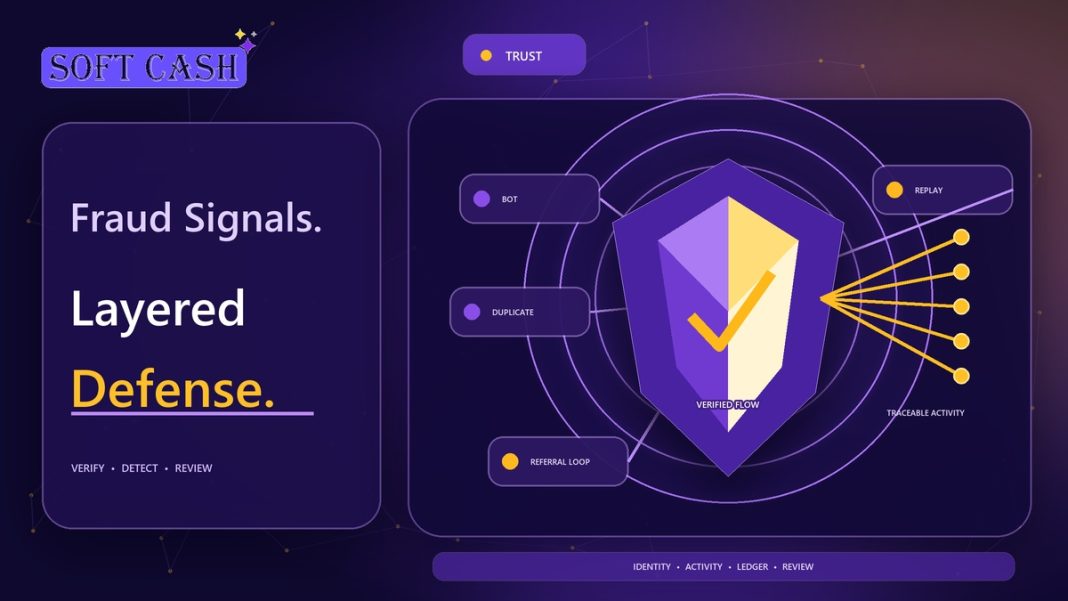
Use only official access points, secure the email account tied to the profile, enable available security controls, and pause when a message creates artificial urgency. The guide to Soft Cash Finance’s fraud-prevention approach explains why identity, activity, transaction, and review controls must work together.
Platform operations and rule changes matter
Web3 platforms also carry operational risk. Rules, rewards, fees, access requirements, supported features, and third-party services may change through governed configuration. Maintenance, human error, administrator misuse, reconciliation exceptions, or a provider outage can affect normal service.
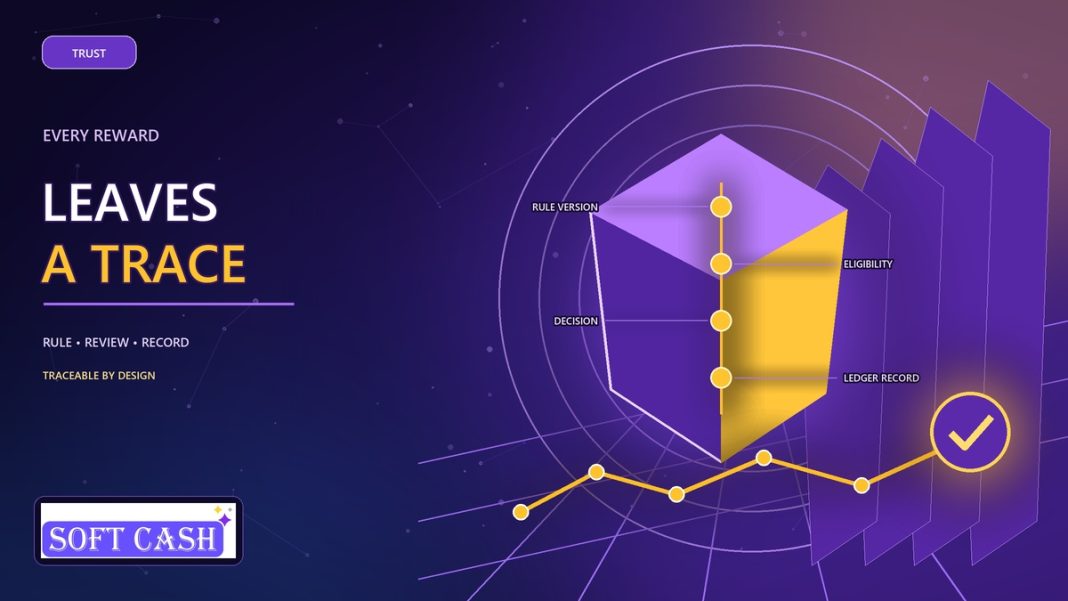
A responsible platform should keep important decisions traceable, record material financial history, announce significant active-rule changes, and avoid silently rewriting prior records. Those practices improve accountability, but they do not remove every operational risk or guarantee uninterrupted availability.
Legal and regulatory treatment can also differ by jurisdiction and may change. Users should not assume that a feature is available or treated the same way everywhere. General platform information is not individualized legal, tax, or financial advice.
Rewards, staking, and opportunities need extra scrutiny
Reward programs may require specific actions and verification before a credit is approved. Staking adds lock-duration, early-exit, missed-claim, platform, token-value, and liquidity risks. Advertising, creator, manager, referral, and other opportunity features may depend on review, performance, current rules, or an individual agreement.
Do not treat a displayed rate, reward range, commission percentage, or campaign example as guaranteed personal earnings. Check the current official terms, understand what can change, and consider whether the amount at risk and the lock or eligibility conditions fit your situation. For staking-specific cautions, read the SOFT staking risk disclosure.
A practical Web3 risk checklist
- Verify the source. Use official domains and confirm announcements through approved channels.
- Understand the balance. Know whether a value is on-chain, pending, or recorded in an off-chain ledger.
- Review the transaction. Check network, address, amount, fees, net result, status, and reference.
- Protect credentials. Never disclose passwords, PINs, recovery phrases, private keys, or authentication codes.
- Check conditions. Read current eligibility, verification, lock, expiry, review, and fee rules.
- Avoid overexposure. Do not commit more time, data, or assets than you can afford to lose or have unavailable.
- Keep evidence. Save transaction references and use official support if something does not match.
Key takeaways
- Web3 participation involves market, technical, security, operational, liquidity, and regulatory risks.
- Utility and reward functions do not guarantee token value, income, returns, or liquidity.
- On-chain holdings and off-chain reward records should be understood separately.
- Security controls reduce risk but cannot replace careful user decisions.
- Current official information should be checked before any transaction or commitment.
Frequently asked questions
Can a Web3 platform be completely risk-free?
No. Security and governance controls can reduce or organize risk, but they cannot eliminate market changes, software failures, scams, account compromise, provider outages, or regulatory uncertainty.
Does an on-chain transaction guarantee the related offer is legitimate?
No. A blockchain record can prove that a transaction occurred, but users must still verify the counterparty, purpose, network, address, and surrounding claim.
Are token rewards the same as guaranteed income?
No. Rewards can be conditional and configurable, while token value and liquidity can change. Participation does not guarantee personal earnings or returns.
What should I do before staking or locking tokens?
Review the current term, weekly-bonus rules, early-exit consequences, token and liquidity risks, and whether the locked amount suits your circumstances.
Where can I confirm current platform rules?
Visit the official Soft Cash Finance website for current information, approved access points, and notices before participating.