


Soft Cash Finance approaches fraud prevention as a coordinated system of identity checks, server-side rules, duplicate protection, transaction controls, and auditable review. The goal is to distinguish genuine participation from account abuse, automated activity, false referrals, duplicate credits, and suspicious financial actions without presenting any single safeguard as a complete guarantee.
Fraud prevention matters because one manipulated account or repeated event can affect more than that user. It can distort rewards, referral levels, leaderboards, financial records, and the experience of legitimate participants.
Fraud prevention begins with verified identity
The platform’s starting point is a strict one-person-one-account policy. Email address, mobile number, and government photo-ID number are treated as unique identity attributes. The four-step verification model also separates registration from full verification, so opening an account does not automatically unlock every financial function.
This identity layer is designed to make common abuse patterns harder, including multi-accounting, duplicate identities, and account networks created only to collect benefits. KYC remains one part of the wider process rather than a promise that fraud can never occur. Readers can review why Soft Cash Finance requires KYC verification and the separate guide to the four-step verification process.
Activity is evaluated by server-side rules
Eligibility, reward calculation, rankings, verification, and financial rules are determined on the server. A timer, counter, or success message shown on a device is only part of the interface; it does not become the authority for a reward decision.
Mission definitions are expected to include eligibility, a target, a time window, accepted event types, deduplication, a reward rule, budget, caps, verification, and claim behaviour. Events carry identifiers, actors, sources, timestamps, schema versions, and deduplication keys. When the same idempotency key is received again, the safe result is the original outcome—not another credit.
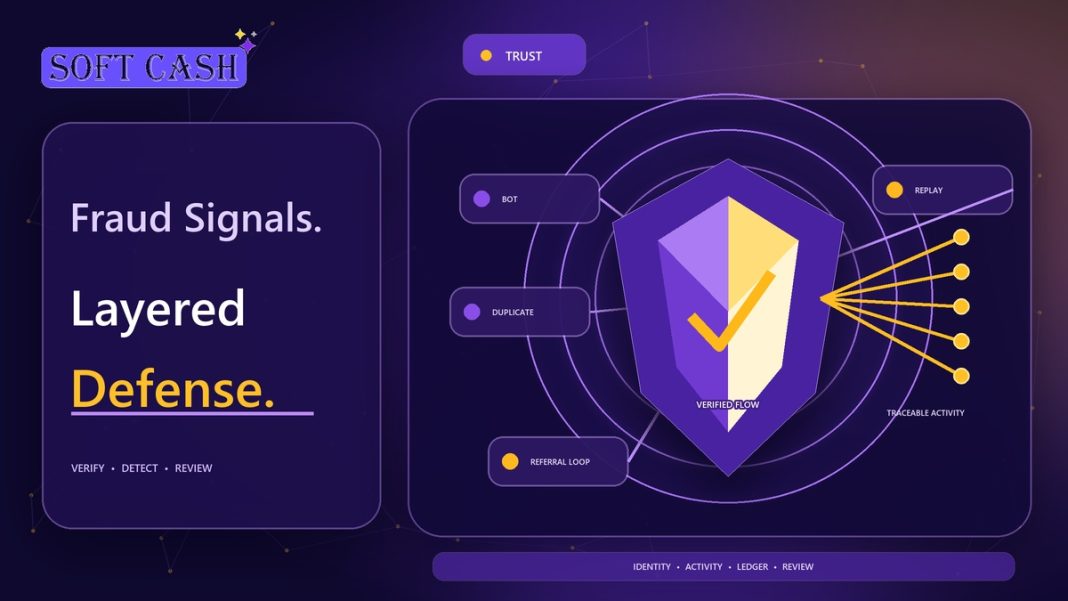
These controls help address mission automation, bot abuse, replayed requests, and accidental duplicates. The dedicated Anti-Bot Activation guide explains the user-facing verification step; operational fraud prevention continues beyond that single checkpoint.
Referral integrity protects genuine networks
Referral systems can be targeted by self-referral, circular networks, duplicate identity, device farms, and synthetic activity. Soft Cash Finance’s governing design calls for immutable inviter attribution and a unique referral edge for each referred user, with loop checking to help detect circular structures.
A referred account’s status should remain visible as it moves through relevant stages instead of being treated as qualified at first click. This supports fairer reward release and more reliable user-level calculations. It also means referral benefits are governed opportunities, not guaranteed earnings.
Financial actions use controls and audit trails
Fraud prevention also applies to balances, withdrawals, transfers, and administrative actions. Sensitive changes and withdrawals require step-up authentication. Access, withdrawal, or internal transfer may be restricted by policy, but the normal design calls for a recorded reason, visible history, and an appeal or support path.
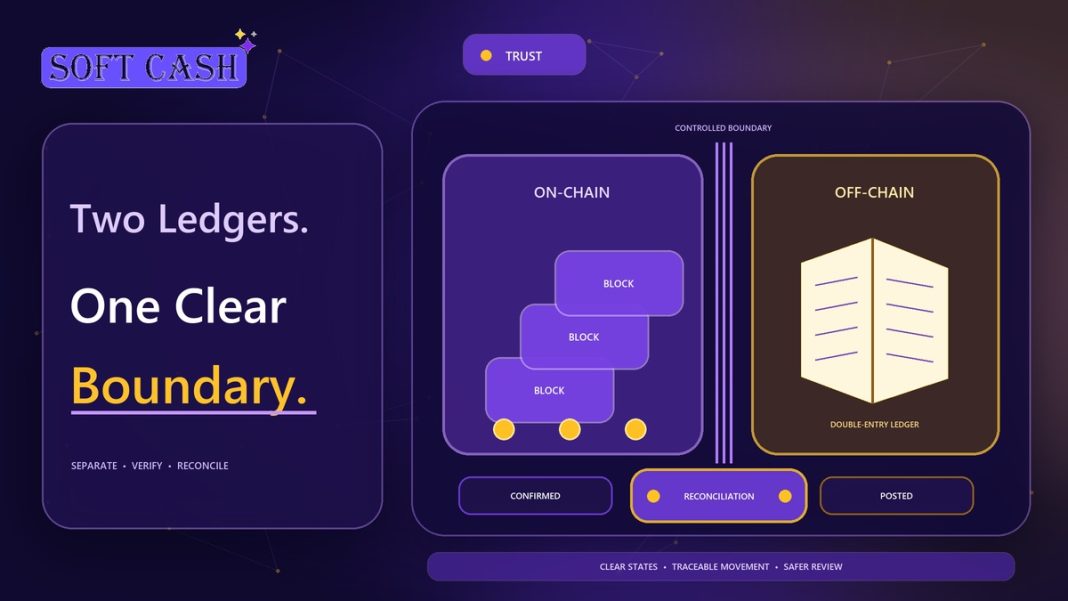
Internal Reward Center movements use double-entry ledger discipline. Entries are designed to be immutable, while corrections use linked compensating entries rather than silently changing history. Unique idempotency keys reduce the risk of duplicate postings, and reconciliation compares internal workflow, relevant provider or payment state, and blockchain state. Exceptions enter review instead of being forced into agreement.
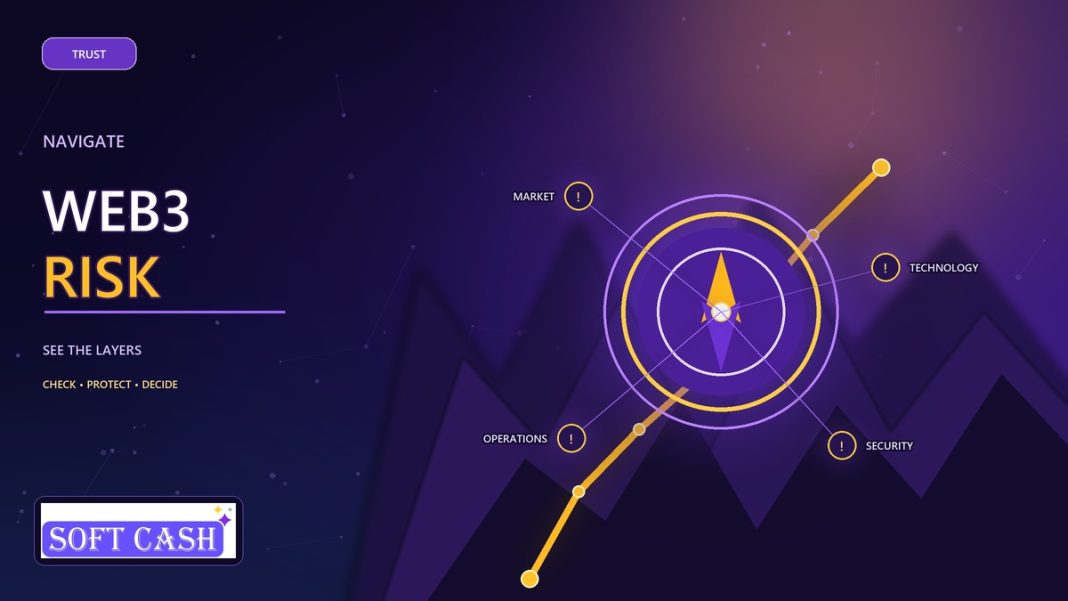
This does not make transactions risk-free. Credentials may be compromised, social engineering can bypass user caution, and blockchain actions may be irreversible. Fraud controls reduce and organize risk; they cannot eliminate it.
A broad threat model avoids tunnel vision
The platform’s threat model extends beyond fake accounts. It covers identity takeover, multi-accounting, fake referrals, mission automation, ledger duplication, withdrawal abuse, creator plagiarism or fake engagement, coupon and invoice fraud, leaderboard gaming, administrator abuse, webhook replay, and blockchain reorganization or key compromise.
Different threats require different evidence and responses. A duplicate event needs idempotent processing; an account takeover needs authentication and session controls; a suspicious withdrawal needs step-up checks and review; a manipulated leaderboard needs a frozen snapshot and eligibility review. Treating every problem as “bot activity� would leave important gaps.
What users can do to reduce fraud risk
- Use only official access points. Check the domain before entering credentials or approving a transaction.
- Keep secrets private. Never share passwords, PINs, authentication codes, private keys, seed phrases, or recovery credentials.
- Protect account recovery. Secure the email account connected to the profile and review unexpected reset messages carefully.
- Review every financial confirmation. Check the amount, fee, net result, destination, network, status, timestamp, and reference.
- Report suspicious activity. Preserve relevant references and use the official support path rather than responding to an unsolicited private offer.
Key takeaways
- Fraud prevention combines identity, server-side eligibility, deduplication, transaction controls, and review.
- The one-person-one-account policy uses unique email, mobile, and government photo-ID attributes.
- Referral controls target self-referral, circular networks, duplicate identities, device farms, and synthetic activity.
- Idempotency and immutable ledger history help prevent duplicate credits and hidden financial edits.
- No control guarantees that fraud, account compromise, or Web3 risk will be eliminated.
Frequently asked questions
Does KYC alone prevent fraud?
No. Identity verification is one layer. Activity rules, duplicate protection, authentication, ledger controls, reconciliation, monitoring, and review address other risks.
How does the platform avoid duplicate reward credits?
Events and ledger postings use unique deduplication or idempotency keys. Repeating the same key should return the original result rather than create another credit.
Can a suspicious financial action be reviewed?
Yes. The normal design allows access, withdrawals, or internal transfers to be restricted by policy with a recorded reason, history, and support or appeal path.
Are leaderboard results final immediately?
No. Rankings are provisional until the relevant snapshot, eligibility and fraud review, and finalization process is complete.
Where should I check current security guidance?
Use the official Soft Cash Finance website for current notices, approved access points, and support information. Do not rely on unsolicited private messages.