

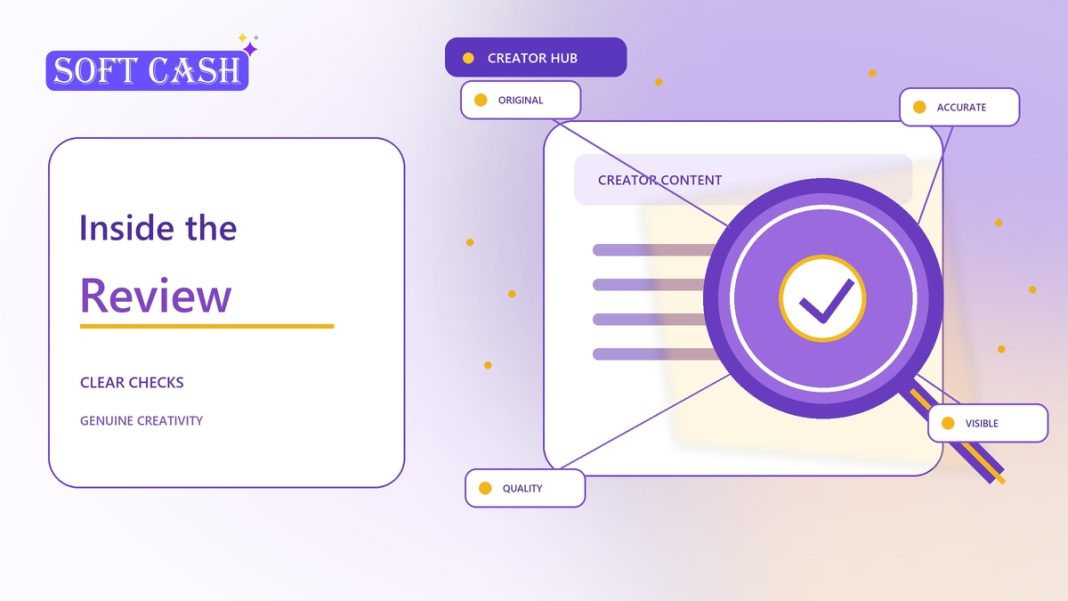
Before Creator Hub content is approved, Soft Cash Finance checks whether it is original, owned by the submitter, accurate, useful, publicly visible, genuinely engaging, free from plagiarism, brand-compliant, and not spam. The aim is to recognize real creative effort while filtering out copied, misleading, manipulated, or low-quality submissions.
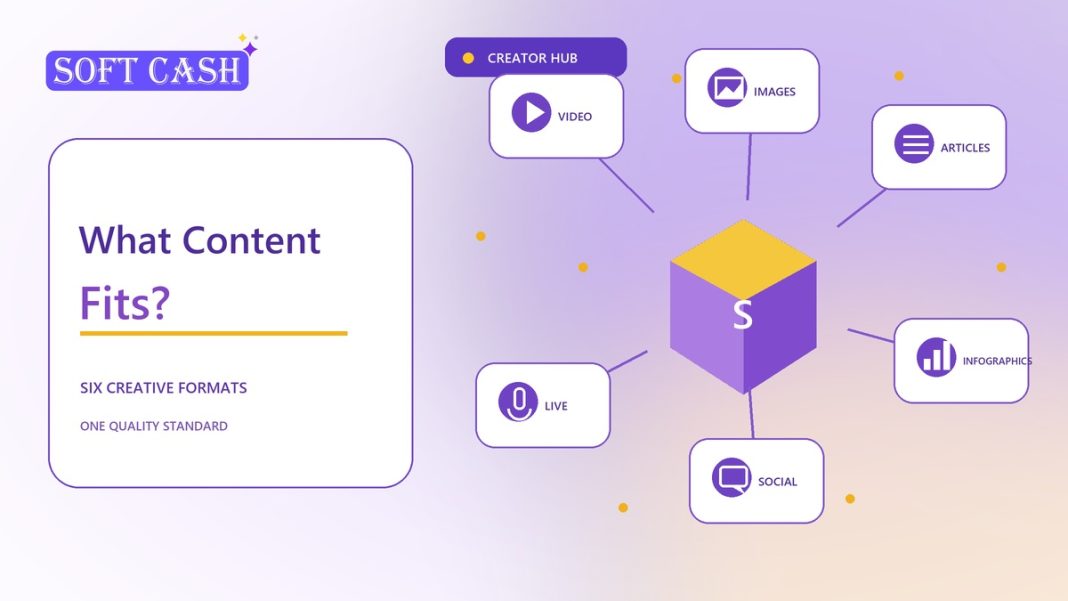
Approval is not automatic simply because a format is accepted. Review applies across videos, images, blog posts, articles, infographics, social posts, podcasts, and live sessions, with the same core standards adapted to the medium.
The nine confirmed Creator Hub review checks
The governing Creator Hub framework identifies nine areas that reviewers consider. These checks work together; a polished presentation cannot compensate for copied material, and accurate information still needs to be visible and useful to an audience.
- Originality: the submission should show genuine creative input rather than reproduce an existing post with superficial changes.
- Ownership: the creator should have the right to submit the work and any material included in it.
- Accuracy: names, features, figures, instructions, and links should agree with current official Soft Cash Finance information.
- Quality: the work should be understandable, reasonably complete, and suitable for the chosen format.
- Visibility: reviewers need a working public URL where they can access the published content.
- Engagement: genuine audience response can help show that the content is reaching people, while artificial activity raises concerns.
- Plagiarism: copied wording, visuals, audio, or ideas presented as original can prevent approval.
- Brand compliance: the work should represent Soft Cash Finance responsibly and avoid impersonation, false claims, or misleading use of the brand.
- Spam risk: repetitive, deceptive, automated, or mass-produced submissions can be rejected as low-value or manipulative.
How originality and ownership differ
Originality asks whether the work reflects a real creative contribution. Ownership asks whether the submitter has the right to publish and submit everything used. A creator can produce an original explanation yet still create an ownership problem by using unlicensed images, music, footage, or another person’s writing.
A safer approach is to create core material yourself, attribute sources where appropriate, retain project files or publication records, and avoid content that merely rearranges someone else’s work. Creator Hub licensing and disclosure terms are still being finalized, so creators should consult current Creator Guidelines rather than assume a particular permission model.
Accuracy, quality, and brand compliance
Accuracy matters because Creator Hub content can influence how users understand missions, balances, verification, staking, and rewards. Check every numeric value and product rule against current official information shortly before publishing. Configurable values can change, and old screenshots or posts may no longer reflect the current platform.
Quality does not mean every creator needs professional equipment. The confirmed acceptance approach is intentionally practical: genuinely relevant information that meets a reasonable minimum quality standard and shows some audience engagement is generally accepted rather than subjected to an unnecessarily high barrier. Clear audio, readable text, logical structure, and a useful message can matter more than decorative complexity.
Brand compliance also requires responsible claims. Do not guarantee approval, income, returns, token-price growth, liquidity, or risk-free participation. Do not present yourself as an official representative unless that role is formally authorized.
Visibility, engagement, and spam signals
Creator Hub submissions are based on publicly published content URLs. A broken, private, restricted, or removed page cannot be properly reviewed for visibility. Before submitting, open the link in a signed-out browser and confirm that the intended content loads.
Engagement should be authentic. The source framework does not publish a fixed follower count, view threshold, or universal engagement score. Creators should not buy reactions, automate traffic, or manufacture comments to appear eligible. Those tactics conflict with the wider goal of genuine human value creation and can create spam or fraud concerns.
What approval does and does not mean
Approval means a submission has passed the relevant review and can be handled under current Creator Hub rules. It does not guarantee a fixed payment for every format or establish guaranteed future income.
Accepted videos currently use a configurable reward range of 1,000 to 100,000 SOFT per video, with the amount reflecting quality, originality, and engagement. Non-video submissions may be rewarded case by case, but no fixed amount is committed and a reward is not guaranteed for every submission. Approved rewards are denominated in SOFT and credited to the Reward Balance, not promised in an external currency.
The exact scoring rubric, per-submission reward-pool budget, licensing terms, and disclosure requirements remain open or subject to published Creator Guidelines. There is also no confirmed universal review-time promise. Creators should monitor the platform’s submission tracking and official announcements rather than rely on an invented deadline.
A practical pre-review checklist
- Open the final public URL while signed out and confirm it works.
- Check that you own or have appropriate rights to the text, images, audio, and video used.
- Compare product claims and numbers with current official information.
- Remove copied passages, misleading edits, fake urgency, and guaranteed-outcome language.
- Improve readability, audio clarity, captions, structure, and mobile presentation where relevant.
- Confirm that any engagement is authentic and that the post is not repetitive spam.
- Submit the correct URL and retain your publication and creation records.
Key takeaways
- Creator Hub review covers originality, ownership, accuracy, quality, visibility, engagement, plagiarism, brand compliance, and spam risk.
- An accepted content format does not create automatic approval.
- Relevant work with a reasonable quality standard and some genuine engagement is generally accepted, but all review checks still apply.
- No fixed public follower threshold, universal engagement score, or guaranteed review time is confirmed.
- Approval and rewards are never guarantees of recurring income or future acceptance.
Frequently asked questions
Does every Creator Hub submission go through review?
Yes. Public submissions are reviewed before approval, using the confirmed checks appropriate to the content format.
Is there a minimum follower or view requirement?
No fixed public follower count or universal view threshold is confirmed. Genuine engagement is considered, but creators should not invent a target or manipulate activity.
Can accurate content still fail review?
Yes. Accuracy is one check among several. A submission can still have ownership, plagiarism, quality, visibility, brand-compliance, or spam problems.
How long does Creator Hub approval take?
No universal review-time commitment is confirmed in the governing sources. Use the platform’s submission tracking and current official guidance.
Where should creators check the latest rules?
Read the Creator Hub overview, follow the submission guide, review accepted content formats, and visit the official Soft Cash Finance website for current Creator Guidelines and announcements.