

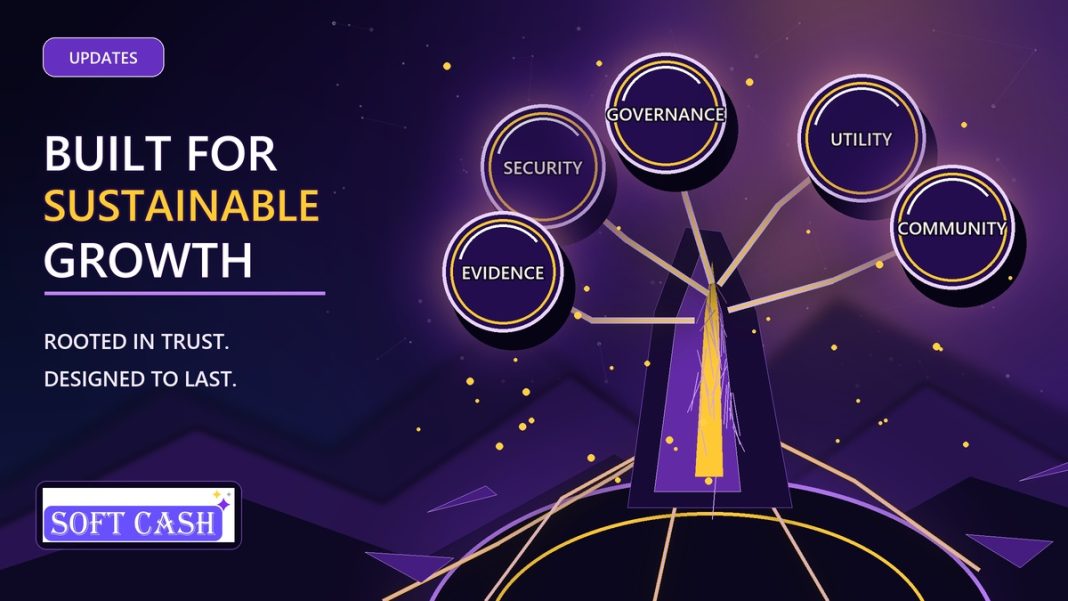
Soft Cash Finance approaches long-term, sustainable growth by combining security, governed rules, useful participation, diversified ecosystem activity, and phased development. Growth is treated as something that must remain understandable, verifiable, and supportable over time—not simply as a race for larger rewards or faster expansion.
This approach does not guarantee income, token value, liquidity, adoption, or project success. It defines the discipline intended to guide decisions as the ecosystem develops and conditions change.
Sustainable growth begins with security and trustworthy records
Growth becomes fragile when participation increases faster than a platform’s ability to protect accounts, verify activity, and preserve accurate financial records. Soft Cash Finance therefore places core decisions such as eligibility, balances, rewards, verification, authorization, and rankings on the server side rather than trusting what a user device reports.
The security model uses layered controls. These include separate credentials for account access and sensitive transactions, step-up authentication for high-risk actions, session limits, scoped permissions, rate limits, encryption, backups, and monitored audit records. Fraud prevention is designed to address risks such as account takeover, duplicate identities, synthetic referrals, automated mission abuse, repeated reward claims, and manipulation of rankings or content engagement.
Security is not presented as absolute protection. Technical, operational, blockchain, privacy, and user-error risks still exist. The practical aim is to reduce avoidable exposure, detect suspicious patterns, and ensure that important actions leave evidence that can be reviewed.
Governance keeps configurable rules transparent
A sustainable platform needs room to adjust without making its rules unpredictable. Soft Cash Finance treats rewards, fees, limits, and mission parameters as governed settings. A defined rule lifecycle moves a proposed setting through review, approval, scheduling, activation, and eventual replacement or cancellation.
Each active cycle is intended to retain the rule version it used. Material changes should be documented and announced through official channels rather than applied silently. This makes flexibility compatible with accountability: a parameter can change when funding, fraud loss, treasury policy, liquidity needs, or operational evidence justify an adjustment, while users can still identify the rule that applies.
High-risk administration also depends on explicit roles and named permissions, with stronger authentication, recorded reasons, and separation of duties where practical. For a closer look, read how Soft Cash Finance platform governance uses roles and permissions.
Real utility gives participation a purpose
Long-term growth cannot depend only on attracting users with headline reward figures. The Soft Cash Finance model connects the SOFT utility token with an engagement platform that includes missions, referrals, staking, Soft Deals, creator activity, advertising, manager-assisted commerce, recognition, wallet services, and community participation.
Different activities serve different purposes. Missions can recognize verified engagement. Creator submissions can contribute useful public content after review. Advertising and manager-assisted sales can connect commercial activity to the ecosystem. Soft Deals can provide optional token-denominated utility. Referrals can support community growth when they represent genuine users rather than artificial networks.
The architecture also keeps the on-chain SOFT Wallet separate from the off-chain Reward Center. Confirmed blockchain holdings belong to the wallet context; pending and approved internal rewards belong to the platform ledger. That distinction helps users understand where value is recorded and prevents an internal balance from being presented as confirmed on-chain value.
Community rewards must stay balanced with ecosystem health
Community participation is central to Soft Cash Finance, but community-first does not mean unlimited incentives. The governing reward philosophy requires every reward to have a purpose, funding source, eligibility rule, cap, verification path, and audit trail before it is offered.
Rewards are expected to be evaluated against realised platform activity, fraud loss, treasury policy, and liquidity needs. The broader business model includes several potential revenue channels—such as approved token sales, advertising, Soft Deals, manager-assisted commercial sales, partnerships, and configurable service or transaction fees—rather than depending on one source alone. Availability and performance of any channel should still be confirmed through current official information.
This balance protects the community as well as the operating model. Genuine contributors need fair rules and meaningful recognition, while the ecosystem needs controls that discourage bots, duplicate accounts, manipulation, and open-ended liabilities. The related article why structural discipline matters more than reward size explains why a number is credible only when the system behind it is clear.
An evidence-led roadmap favours readiness over fixed dates
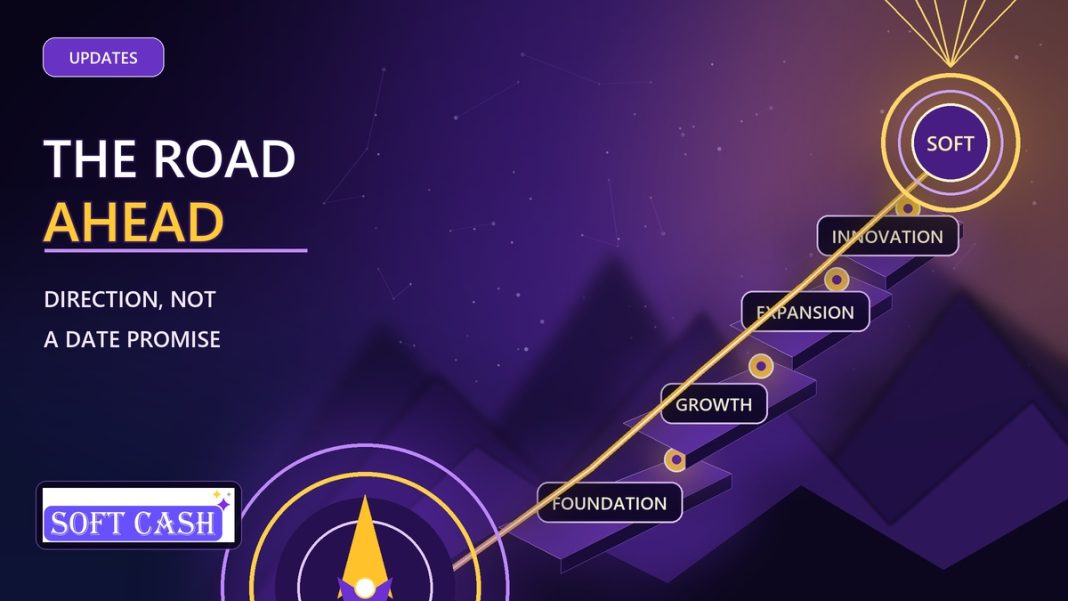
Soft Cash Finance describes development through phased direction: foundation, platform and community growth, ecosystem expansion, and future innovation. The sequence helps explain priorities, but it is not a promise that every milestone is complete or will arrive on a fixed date.
An evidence-led roadmap asks practical questions before expansion: Is the feature secure enough to release? Are rules and eligibility clear? Can the activity be measured and audited? Are funding and operational capacity adequate? Does legal or regional review affect availability? What do live results show should be improved?
This allows priorities and pacing to respond to security review, product readiness, market conditions, regulation, and community needs without hiding material changes. Readers can explore the Soft Cash Finance roadmap and its four directional phases, then use current official announcements to verify actual status.
Key takeaways
- Sustainable growth starts with secure access, server-side decisions, accurate ledgers, fraud controls, and reviewable records.
- Configurable rules remain trustworthy only when changes are versioned, approved, documented, and announced.
- SOFT utility connects multiple forms of participation, while the SOFT Wallet and Reward Center remain distinct.
- Community rewards must be funded, capped, attributable, verifiable, and balanced against ecosystem health.
- The roadmap provides direction, while evidence and official updates determine readiness and current status.
Frequently asked questions
What does sustainable growth mean for Soft Cash Finance?
It means developing the ecosystem around security, useful participation, governed rules, responsible reward funding, diversified activity, and phased delivery. It does not mean guaranteed expansion or financial results.
Why can rewards, fees, or limits change?
They are configurable operating parameters. Adjustments may be needed to reflect funding, fraud, treasury, liquidity, security, or operational evidence. Material changes should be versioned and communicated through official channels.
How does real utility support long-term growth?
Utility gives SOFT and community activity practical roles across supported features such as missions, deals, creator activity, advertising, commerce, staking, and value exchange. Each feature remains subject to its current rules, eligibility, availability, and risks.
Does this approach remove Web3 risk?
No. Governance and security controls can improve clarity and accountability, but they cannot remove token volatility, liquidity constraints, technical failures, regulatory change, operational risk, or user error. Participants should review current terms before acting.
For current feature status, rules, and official ecosystem updates, visit Soft Cash Finance and verify the latest information before participating.