


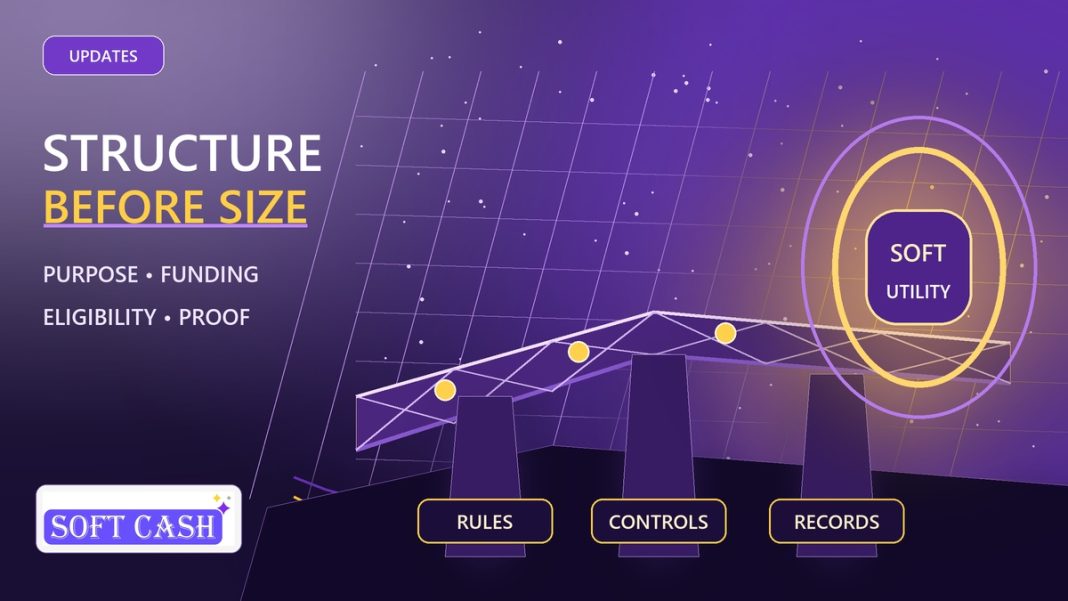
Structural discipline matters more than reward size in Web3 because a large number cannot make an unclear, unfunded, unverifiable, or poorly controlled program sustainable. A credible reward system needs defined purpose, funding, eligibility, verification, limits, records, and a transparent change process before the headline amount has practical meaning.
Soft Cash Finance applies that principle by treating rewards as governed platform decisions rather than isolated promotional promises. The goal is not to make participation look effortless; it is to make the rules, value location, controls, and risks understandable.
A reward number is only the visible layer
Reward size is easy to compare, but it answers only one question: how much may be allocated under the current rule? It does not explain why the reward exists, who qualifies, how the activity is verified, where the value is recorded, what limits apply, or whether the program can be funded over time.
Those structural questions determine whether a system can operate consistently. A smaller, clearly governed reward can be more useful than a larger figure attached to vague eligibility or weak controls. In Web3, this distinction is especially important because users may face token-price volatility, liquidity constraints, technical failures, account-security risks, changing regulations, and different forms of on-chain and off-chain value.
What structural discipline looks like
Soft Cash Finance’s governing model states that every reward needs purpose, funding, eligibility, verification, and auditability. In practice, a disciplined design also needs limits, a defined time window, fraud controls, budget awareness, and a clear credit or claim process.
- Purpose: the reward should support a real platform objective, not activity without useful value.
- Funding: the obligation should be connected to an approved and reviewable source rather than an unsupported promise.
- Eligibility: users should be able to understand the conditions that apply before they act.
- Verification: server-side checks should confirm the qualifying event and resist duplicate, synthetic, or bot-driven activity.
- Limits and budgets: caps, windows, and program budgets protect the system from uncontrolled liabilities.
- Auditability: decisions and financial records should remain traceable, including corrections and authorized adjustments.
This structure does not guarantee that a Web3 program will succeed. It does make the program easier to review, explain, operate, and correct.
Separation prevents misleading comparisons
Good structure also keeps unlike forms of value separate. In Soft Cash Finance, the SOFT Wallet is the on-chain interface for confirmed BEP-20 holdings and supported blockchain actions. The Reward Center is an internal, off-chain double-entry ledger for Pending Rewards and approved Reward Balance.
A pending internal reward should not be presented as though it were already an on-chain asset. Likewise, an approved balance does not remove network, market, liquidity, operational, or eligibility considerations. Clear labels, transaction states, confirmation details, and server-enforced rules help users understand what they are viewing.
For a broader view of the connected model, read where Soft Cash Finance fits in the Web3 earning landscape.
Versioned rules are stronger than silent changes
Web3 programs may need to adjust rewards, fees, caps, or operating rules as funding, fraud patterns, product needs, and market conditions change. Structural discipline does not mean every value remains fixed forever. It means material changes are versioned, authorized, recorded, and announced instead of being rewritten silently.
Soft Cash Finance treats current rewards, fees, commissions, taxes, packages, and similar operational figures as governed parameters where applicable. Readers should therefore check the latest official information rather than assuming an older screenshot or article still reflects the active configuration.
Learn more about how rule changes move from draft to active and why reward and fee changes are published.
How users can evaluate a reward program
Before focusing on the largest number, users can ask a short set of practical questions:
- What useful action or outcome is the program designed to support?
- What are the current eligibility, verification, timing, and claim conditions?
- Is the amount pending, approved in an internal ledger, or confirmed on-chain?
- What fees, caps, expiry rules, or cancellation conditions apply?
- How are disputes, adjustments, and rule changes recorded and communicated?
If these answers are missing, a prominent reward figure provides little basis for an informed decision. Users should also protect passwords, PINs, private keys, seed phrases, and recovery credentials, and should ignore off-platform offers that claim to bypass official rules.
Key takeaways
- Reward size alone does not establish credibility, sustainability, or user value.
- A disciplined reward system defines purpose, funding, eligibility, verification, limits, and auditability.
- On-chain SOFT Wallet holdings remain distinct from internal Reward Center records.
- Material operational changes should be authorized, versioned, recorded, and announced.
- Participation does not guarantee income, profit, token appreciation, liquidity, approval, or risk-free outcomes.
Frequently asked questions
Does a larger Web3 reward mean a better program?
No. A larger figure can still be attached to unclear eligibility, weak funding, poor verification, or unsustainable liabilities. Structure determines whether the program can be operated and reviewed responsibly.
What makes a reward auditable?
An auditable reward has a traceable rule, qualifying event, decision, amount, status, time, and authorized record. Corrections should use linked adjustments rather than erase material history.
Are Soft Cash Finance reward figures permanent?
Not necessarily. Operational values may be configurable under governed controls. Material changes should be published and announced, so users should check current official information.
Are Reward Center amounts already on-chain?
No. The Reward Center is an internal off-chain ledger. Confirmed blockchain holdings and supported on-chain actions belong to the SOFT Wallet.
Where should I verify current Soft Cash Finance rules?
Visit the official Soft Cash Finance website for current information, announcements, availability, and applicable terms before participating.