

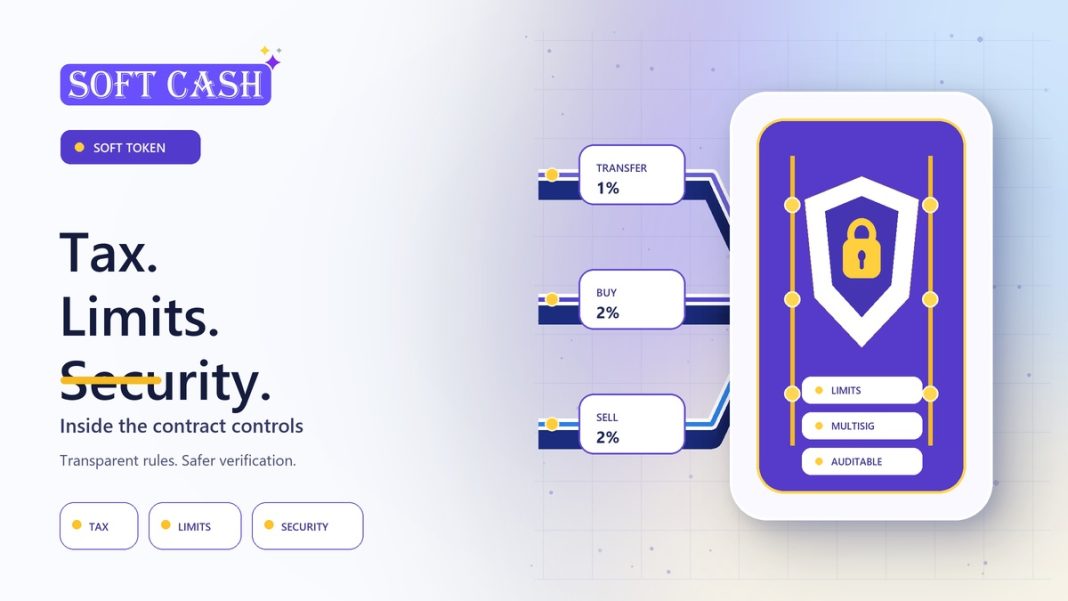
The SOFT smart contract defines how the BEP-20 token can move on BNB Smart Chain and provides governed controls for transaction taxes, transfer limits, address restrictions, and ownership. The current documented baseline is a 1% transfer tax, 2% buy tax, and 2% sell tax, while tax settings are designed to be configurable within a 0–9% maximum boundary.
Those controls should not be read as a promise that every setting is permanently fixed or that a smart contract removes all risk. Users should confirm the contract address, review the live transaction details, and understand that network, market, custody, and configuration risks still apply.
What the SOFT smart contract controls
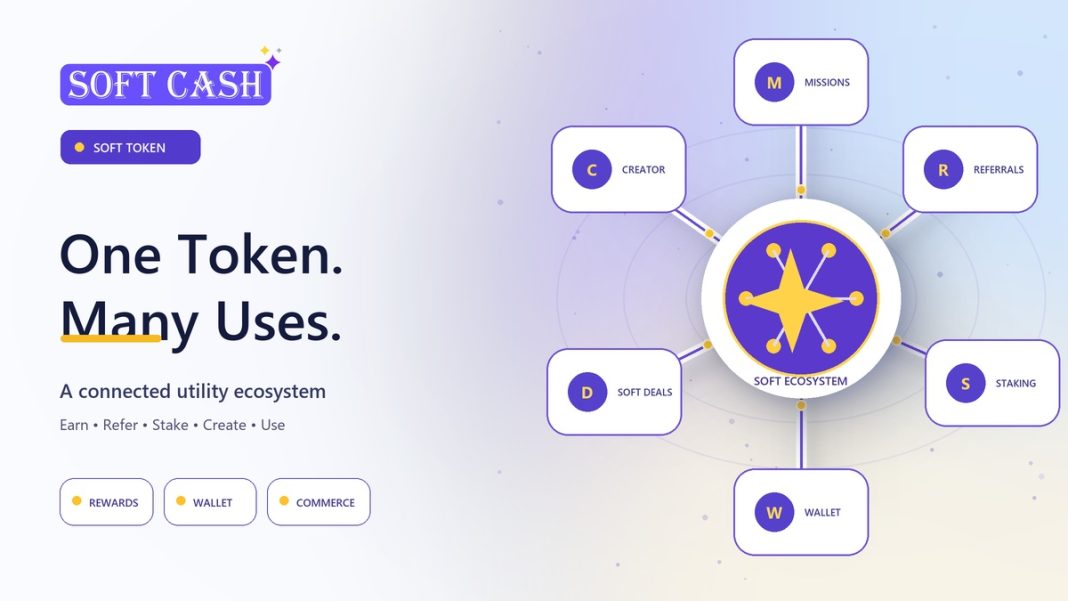
SOFT is documented as a BEP-20 token with 18 decimals and a fixed, non-mintable total supply of 100 billion SOFT. Its smart contract is the on-chain rule set used when tokens are transferred between blockchain addresses or interact with compatible decentralized services.
The contract requirements cover four practical areas: transaction-tax logic, configurable transaction and wallet limits, address-level emergency controls, and administrative ownership. These mechanisms are intended to make token operations governable and auditable, but the exact active configuration should be checked at the time of a transaction.
For the broader token foundation, read SOFT Token Explained: Supply, Standard, and Smart Contract Basics. For transfer and approval mechanics, see How Does the SOFT BEP-20 Token Work?.
How SOFT transaction taxes are structured
The current confirmed baseline separates three transaction contexts:
- Transfer tax: 1%. The documented destination is the Team and Management Fund or another designated wallet.
- Buy tax: 2%. The documented purpose is marketing and promotion through a designated wallet.
- Sell tax: 2%. The documented purpose is automatic buyback, liquidity support, and market stability.
These figures describe the current operating baseline, not a guarantee that every future transaction will use the same configuration. The contract specification allows tax values to be configurable, transparent, and auditable, with a stated maximum boundary of 0–9%. A user should inspect the amount expected, the amount received, the transaction record, and any current official notice before approving an on-chain action.
Taxes are also separate from BNB gas. Gas is a network charge paid to process a BNB Smart Chain transaction; it is not the same as a token tax or a Soft Cash Finance platform fee.
Limits designed to reduce concentration and abuse
The contract requirements include configurable Max Buy and Max Sell token amounts per transaction. They also include Max Transaction and Max Wallet controls that can be expressed as a percentage of total supply. These capabilities can help constrain unusually large transfers, reduce certain forms of concentration, and support a controlled operating policy.
A limit is not automatically evidence of a specific live threshold. The governing documents do not confirm the exact current Max Buy, Max Sell, Max Transaction, or Max Wallet figures, so publishing a number for any of them would be misleading. Users should rely on live contract behavior and current official information rather than an old screenshot, copied setting, or unofficial post.
A failed transaction may have several causes, including insufficient BNB for gas, insufficient token balance, an allowance issue, a live limit, an address restriction, slippage, or a third-party interface problem. Do not keep retrying blindly; verify the transaction data and use an approved support channel when the cause is unclear.
Address controls and administrative security
The specification includes the ability to block or unblock a specific address from transacting. This is an administrative security capability, not a statement that any particular address is currently blocked. Such a control can support incident response and abuse prevention, but it also makes governance, authorization, logging, and disclosure important.
The Dev or Treasury wallet is required to use multisignature control. The operating model also calls for least-privilege signers and recommends hardware-backed keys. Ownership transfer should follow a standard contract function, while high-impact changes should use a delay or timelock if that governance measure is approved.
Contract changes, tax or limit changes, ownership transfers, and emergency actions should emit on-chain events and internal alerts. Private keys, seed phrases, and signing material must never appear in logs, source code, support tickets, or client responses. No legitimate support process should ask a user to disclose a seed phrase.
What users should verify before transacting
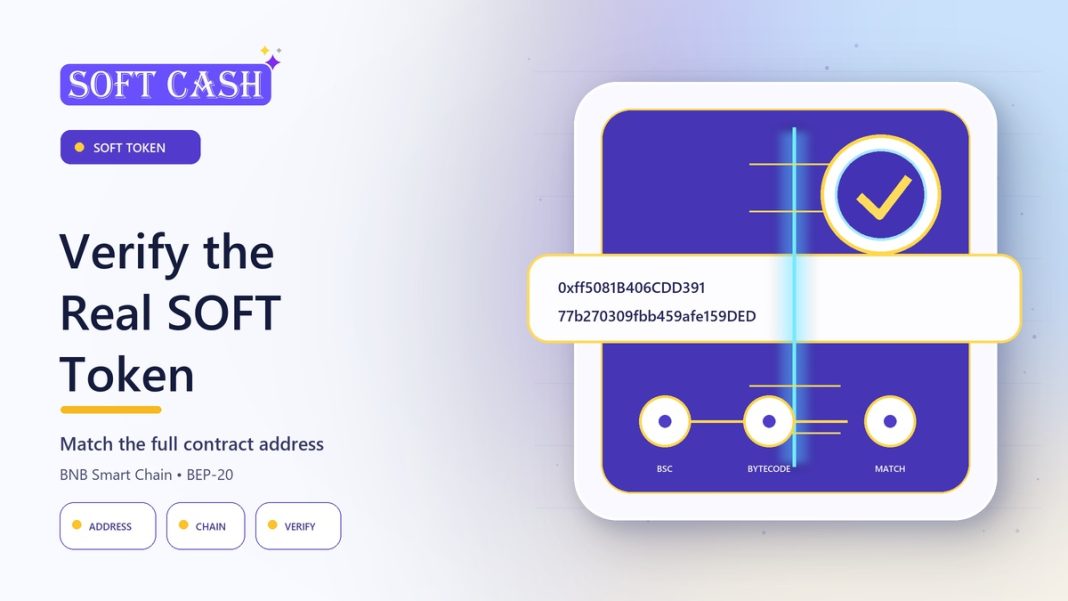
- Confirm the token contract. Use the official source and compare the complete address rather than relying on a token name or icon.
- Review the transaction type. A transfer, buy, sell, or approval can trigger different rules and risks.
- Check the displayed amount and destination. Confirm the network, recipient, estimated gas, expected token amount, and any visible price impact.
- Use a small test when appropriate. A modest first transaction can reduce the consequences of a wrong address or incompatible route, although it does not remove risk.
- Keep signing credentials private. Verify wallet prompts carefully and reject unexpected approvals or signature requests.
For context on where SOFT is used after acquisition, see How SOFT Is Used Across the Soft Cash Finance Ecosystem.
Key takeaways
- The current documented tax baseline is 1% for transfers, 2% for buys, and 2% for sells.
- Tax values are configurable within a documented 0–9% maximum boundary.
- Max Buy, Max Sell, Max Transaction, and Max Wallet are configurable capabilities; exact live thresholds are not confirmed in the governing sources.
- Address blocking, multisignature treasury control, least privilege, events, alerts, and careful ownership transfer are part of the security model.
- Smart-contract controls reduce some risks but do not guarantee liquidity, price, execution, or safety.
Frequently asked questions
Are the SOFT taxes permanently fixed?
No. The current baseline is 1% transfer, 2% buy, and 2% sell, but the contract requirements describe tax values as configurable within a 0–9% maximum boundary. Check current official information before transacting.
What is the difference between token tax and gas?
Token tax is contract-level logic associated with a transfer, buy, or sell. Gas is the BNB Smart Chain network charge needed to process the transaction.
What are the current maximum transaction and wallet limits?
The contract supports configurable limits, but exact live Max Buy, Max Sell, Max Transaction, and Max Wallet values are not confirmed in the governing sources. Do not rely on invented or outdated figures.
Can a smart contract make SOFT risk-free?
No. Contract rules can provide controls and auditability, but users still face market, liquidity, network, custody, configuration, and third-party interface risks.
Where can I check current official information?
Visit the official Soft Cash Finance website and review current platform notices before approving a transaction or relying on a configured value.